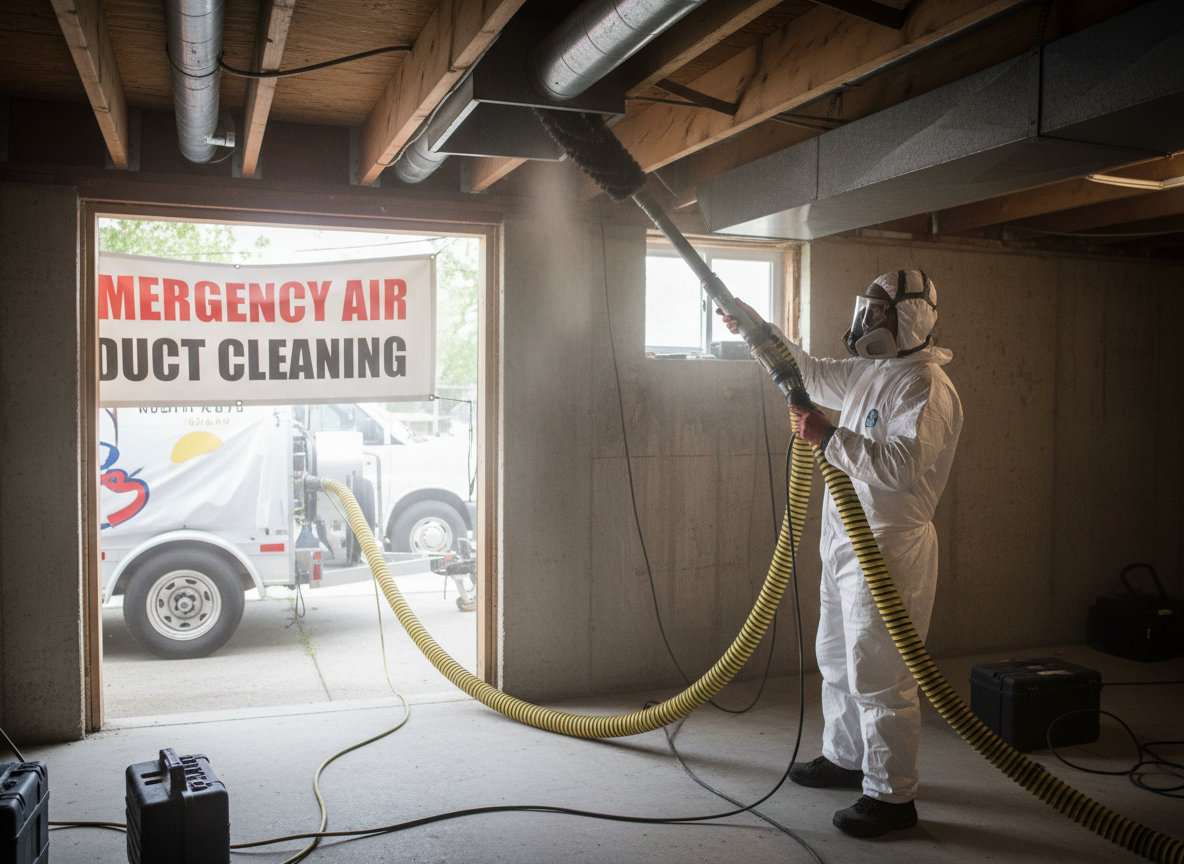
Upper Arlington homes built in the mid-century era around Northam Park and the Municipal Center often have original duct runs that trap pollen and fine dust during the humid continental spring and fall. When a sudden airflow drop occurs, especially after heavy leaf drop or a summer storm, these systems push contaminants through every register. Emergency calls typically start with a full inspection to locate collapsed flex lines or blocked returns before any equipment is brought inside.
In neighborhoods like Arlington Ridge and River Ridge, the tree canopy and proximity to the Olentangy corridor mean extra organic debris enters through attic intakes. Four distinct seasons create rapid humidity swings that loosen old insulation particles inside the ducts. Technicians arriving from the 3855 Reed Rd base carry portable HEPA units sized for these older Franklin County layouts so negative pressure can be maintained without disturbing finished ceilings.
Emergency work near Worthington and Grandview Heights borders frequently involves coordinating with homeowners who have already run the furnace or AC after noticing odors. The priority is isolating affected zones so the rest of the house stays livable while the main trunk lines are cleared. Access panels are cut only where necessary and replaced with matching registers to preserve the original interior finish.
Post-clean verification includes checking static pressure at multiple points because many Upper Arlington systems share returns with finished basements. Leaving even one branch partially blocked can recreate the same emergency within weeks once heating season begins.
Technician insight
In Upper Arlington, the thing that catches most people out with Emergency Air Duct Cleaning is how quickly four-season pollen and leaf debris packs into the original mid-century ductwork around Arlington Ridge once the first cold snap hits; homeowners run the furnace and spread the load before they realize the returns are already compromised.
Sudden Airflow Loss After Fall Leaf Drop
A Tremont homeowner noticed weak airflow from every register the morning after a windstorm. Inspection showed compacted leaf fragments and pollen blocking the main return near the attic intake. The team isolated the affected trunk, cleared the lines under negative pressure, and restored full airflow without cutting additional access points.
How it works
- 1
Initial Assessment
Technician arrives within hours, inspects registers and returns, and identifies the source of restricted airflow.
- 2
Zone Isolation
Affected sections are sealed to prevent cross-contamination while the rest of the home remains usable.
- 3
Negative-Pressure Cleaning
HEPA-equipped equipment pulls debris from trunks and branches without disturbing drywall or insulation.
- 4
System Verification
Static pressure and airflow are rechecked at multiple points before the job is considered complete.
Pricing
Emergency air duct cleaning rates are higher for after-hours or weekend response; final cost depends on number of returns, duct accessibility, and whether trunk lines require section-by-section work.