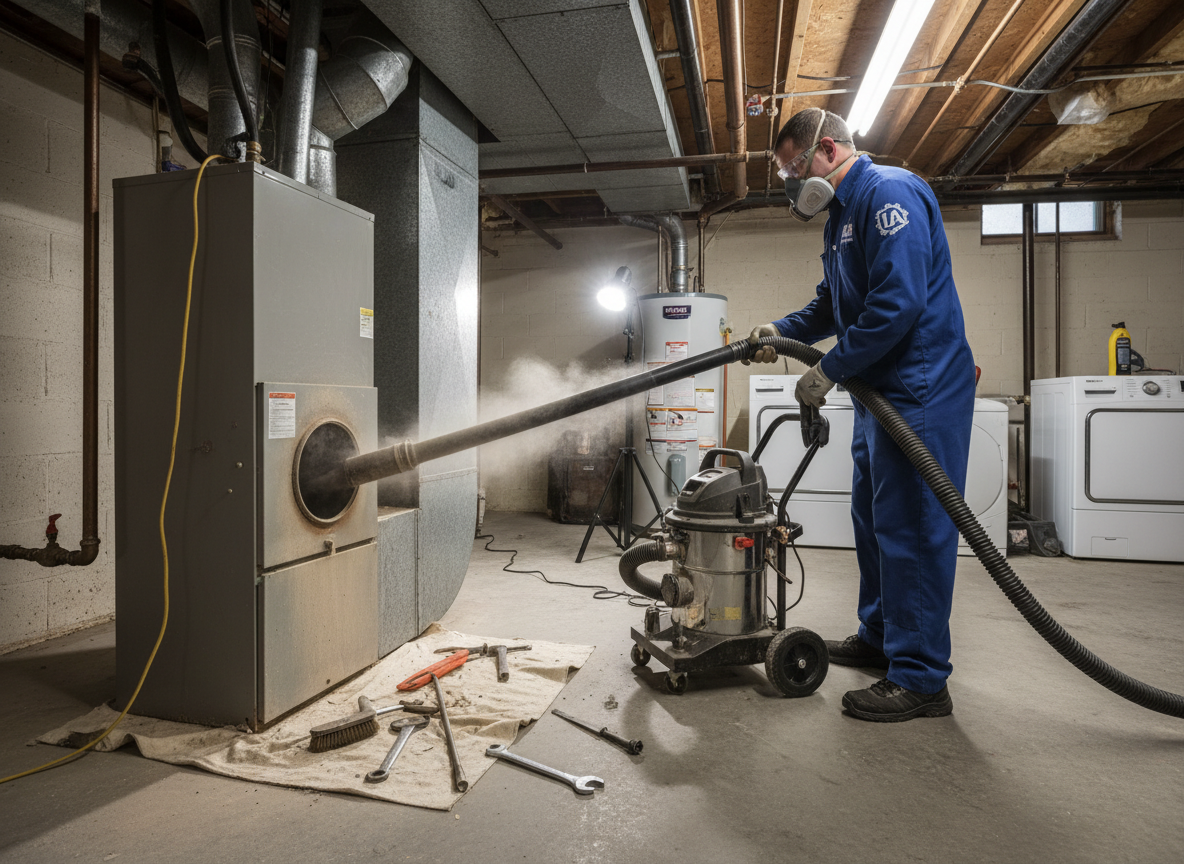
Mountview sits in the heart of Upper Arlington with tree-lined streets and mid-century homes that often retain original duct runs. FluxVentor works from 3855 Reed Rd to reach these houses quickly, clearing dust and seasonal debris that builds up in the humid continental climate of Franklin County. Four distinct seasons mean spring pollen and winter dryness both load filters and branch lines faster than in milder regions.
Nearby Columbus and Worthington traffic patterns make early morning or late evening appointments practical for Mountview residents. Crews navigate narrow driveways and mature landscaping common on Reed Road and Mountview Road, using compact equipment that fits basement and crawl-space access points without disturbing established yards. This focused approach keeps service times short while addressing the specific airflow issues older UA stock presents.
Service extends to adjacent Tremont and River Ridge pockets where similar housing ages create comparable duct conditions. The 24/7 schedule lets homeowners in Mountview schedule around work or school without waiting for standard business hours.
Around Mountview
We regularly work near:
- 📍Reed Road
- 📍Mountview Road
- 📍Northam Park
- 📍Upper Arlington Public Library
- 📍Upper Arlington Municipal Center
- 📍Tremont Road
Air Duct Cleaning in Mountview — Local Notes
- •Mid-century ranches and split-levels along Reed Road and Mountview Road often have original galvanized ducts routed through tight crawl spaces that require sectional tools rather than full truck-mounted systems.
- •Fall leaf cover and spring pollen from Northam Park-adjacent trees increase fine-particle loading in return plenums, so Mountview homes benefit from annual cleaning timed after peak foliage drop.
- •Flat terrain and clay-heavy soils in this Franklin County pocket mean basements stay drier than river-adjacent neighborhoods, allowing consistent access without dewatering equipment during most service calls.
- •Proximity to Grandview Heights and Worthington means some Mountview homes share utility corridors that can route additional outside air into ducts during high-wind events common in spring and fall.