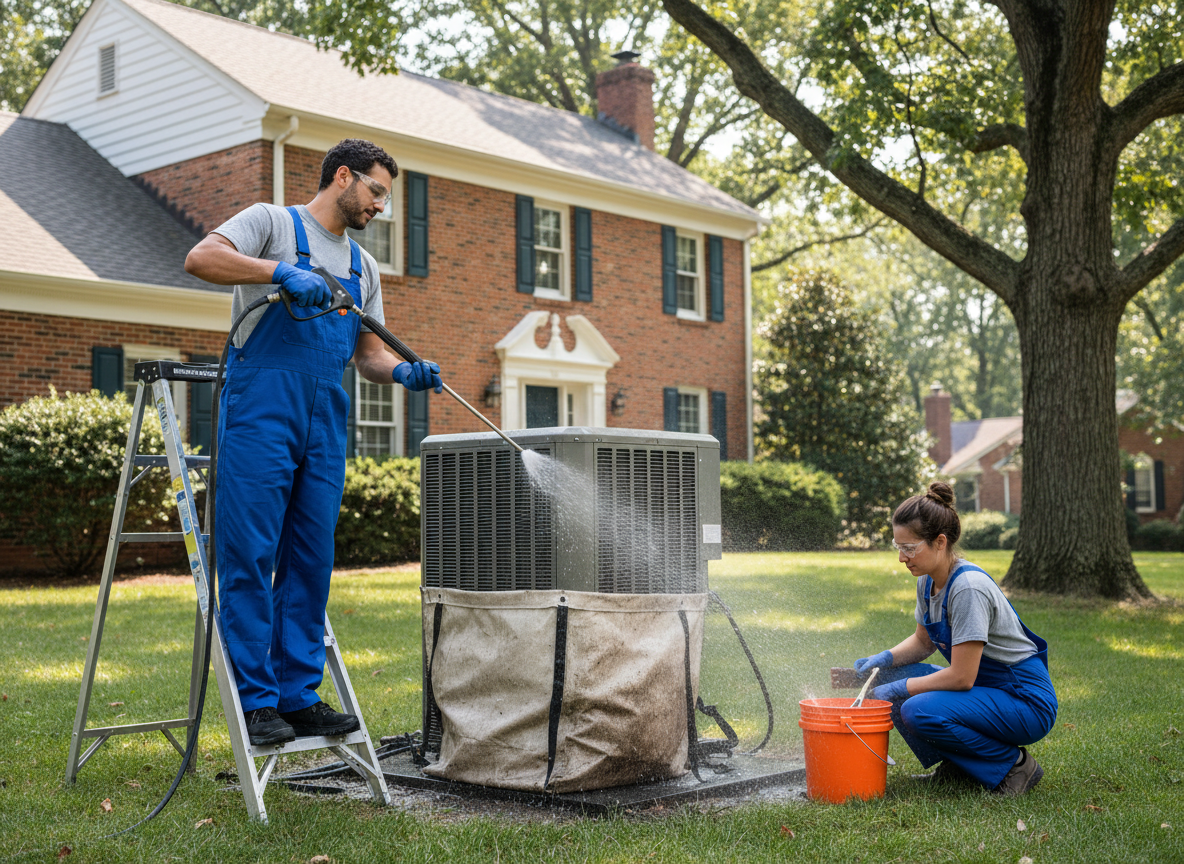
Upper Arlington homes built from the 1950s through the 1980s in neighborhoods such as Arlington Ridge and River Ridge often have original duct runs that trap seasonal debris. Humid continental summers load coils with moisture while winter heating cycles dry and crack insulation, letting fine Franklin County soil dust enter the airstream. Cleaning these systems requires accessing trunk lines behind finished basements without disturbing plaster or hardwood floors common in Tremont.
Four distinct seasons create repeated expansion and contraction in metal ducts routed near the Upper Arlington Public Library and Worthington border. This movement loosens accumulated lint from nearby Grandview Heights construction dust and tree pollen from Northam Park. Technicians must seal registers properly to prevent cross-contamination into living spaces during negative-pressure cleaning.
AC cleaning here also addresses condensate drain lines that clog from high summer humidity, a frequent issue in split systems serving two-story homes along Reed Road. Neglected drains allow standing water to foster mold that travels back into the return plenum, requiring both coil and duct attention in one visit.
Seasonal Considerations
Spring pollen loads and fall leaf debris around the Municipal Center increase filter loading rates. Homeowners in these blocks see faster re-soiling when ducts are not cleaned before the first heating cycle.
Technician insight
In Upper Arlington the thing that catches most people out with ac cleaning service is how the 1960s-era flex duct runs in Arlington Ridge and Tremont trap moisture from our humid summers then release fine Franklin County silt every time the furnace kicks on in winter. Homeowners often replace filters religiously yet still notice musty air because the trunk lines behind finished ceilings never get addressed.
Hidden Moisture in a Two-Story on Reed Road
A homeowner near the Upper Arlington Public Library reported persistent allergy issues despite new filters. Inspection revealed standing water in the condensate line feeding mold into the return plenum of a 1972 home. The line was cleared, coils were treated, and the main trunk was vacuumed, restoring clean airflow before the next heating season.
How it works
- 1
System Inspection
Technicians examine return and supply runs in basements and attics of Upper Arlington homes, noting insulation condition and access points before any equipment is connected.
- 2
Register and Vent Sealing
All floor and wall registers in rooms facing Tremont or River Ridge are sealed to maintain negative pressure and prevent dust migration during cleaning.
- 3
Negative-Pressure Cleaning
HEPA vacuum equipment pulls debris from trunk lines and branches while brushes dislodge buildup typical after Franklin County winters.
- 4
Coil and Drain Service
Evaporator coils and condensate lines are treated to remove moisture-related residue before the system is returned to normal operation.
- 5
Final Airflow Check
Post-clean airflow is verified at multiple points to confirm restored performance without disturbing original ductwork in older Arlington Ridge properties.
Pricing
Upfront quotes based on system size, number of returns, and visible debris load; most Upper Arlington jobs fall into mid-range pricing once the technician sees the duct layout.