Upper Arlington's housing stock, much of it built between the 1940s and 1970s in neighborhoods like Arlington Ridge and Tremont, features ductwork that runs through unconditioned attics and crawl spaces. These systems collect pollen blown in from nearby Northam Park and the tree-lined streets around the Upper Arlington Public Library during the humid continental spring and fall seasons. When winter temperatures drop and furnaces run continuously, that accumulated material gets redistributed, worsening allergy symptoms for residents in River Ridge and adjacent areas of Worthington and Grandview Heights.
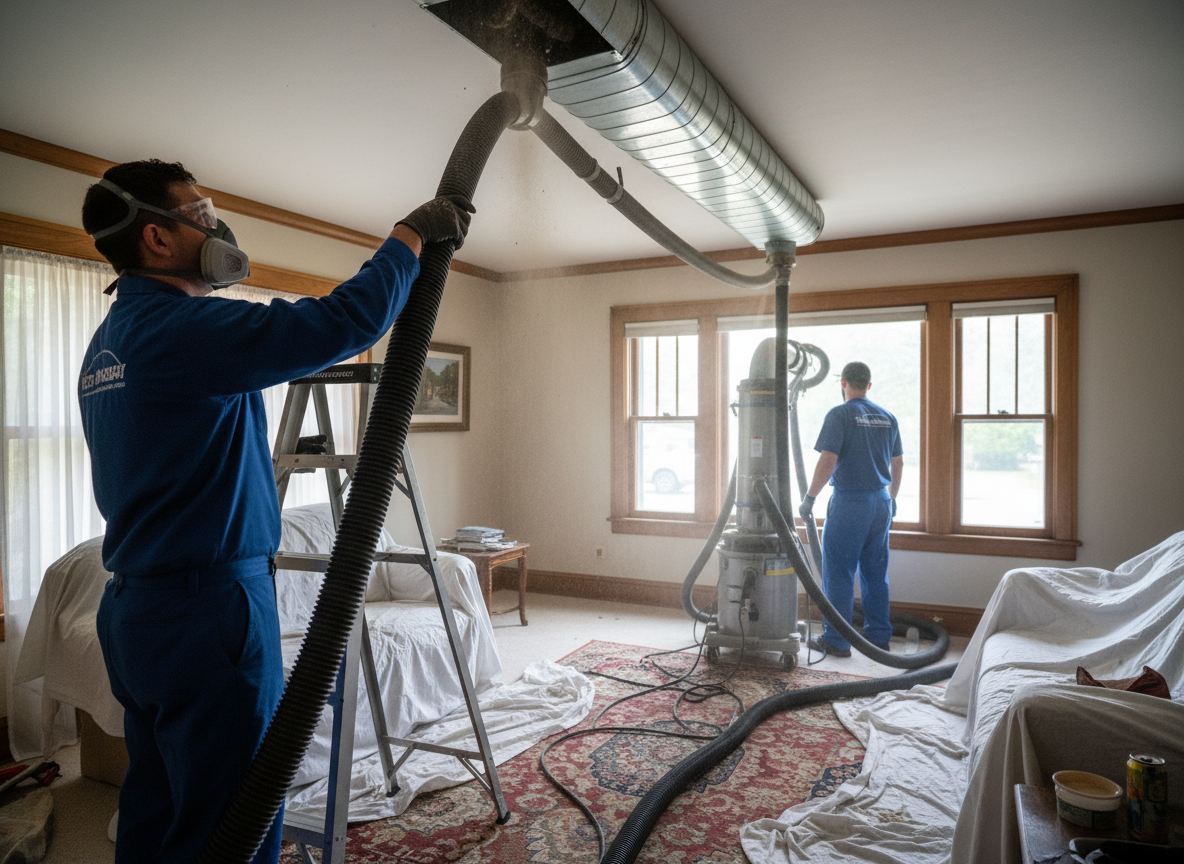
Cleaning for allergies requires more than standard vacuuming. We isolate each branch run, use negative-air machines to prevent cross-contamination into living spaces, and pay special attention to the return plenums where pet dander and outdoor pollen concentrate. In Franklin County homes with original metal ductwork, we also check for gaps at joints that allow humid air to enter and promote mold growth on interior surfaces, a common issue once summer humidity arrives.
Homeowners near the Upper Arlington Municipal Center often notice the difference after we remove the fine layer of dust that standard filters miss. We document before-and-after conditions with photos so residents can see exactly what was pulled from the system serving their living areas and bedrooms.
Technician insight
In Upper Arlington the thing that catches most people out with air duct cleaning for allergies is the original 1950s-60s ductwork in Arlington Ridge and Tremont homes. Those seams leak when the system is under negative pressure, so pollen from Northam Park keeps getting pulled back in unless we seal the joints while we're already in the attic.
Persistent Spring Allergies in River Ridge
A homeowner in River Ridge reported ongoing sneezing and itchy eyes despite new filters. Inspection showed thick pollen and dust layers inside the return plenum feeding the main living areas. We isolated the runs, performed full negative-air cleaning, and sealed visible gaps at the trunk joints. The family reported noticeably clearer air the following week once the furnace cycled again.
How it works
- 1
Initial Assessment
We inspect accessible ducts, returns and the furnace or air handler at the Reed Road address to identify heavy pollen or mold buildup before any work begins.
- 2
Containment Setup
Negative-air machines and sealed entry points prevent loosened allergens from entering living spaces in homes across Arlington Ridge and Tremont.
- 3
Source Removal
Rotary brushes and vacuum collection clear debris from trunk lines and branches while protecting the older duct seams common in Upper Arlington construction.
- 4
Final Verification
We re-inspect and photograph the cleaned system so residents can confirm reduced allergen load before restoring normal airflow.
Pricing
Pricing varies by system size, number of returns and whether mold or heavy debris requires extra containment steps. We provide upfront quotes after the on-site assessment.