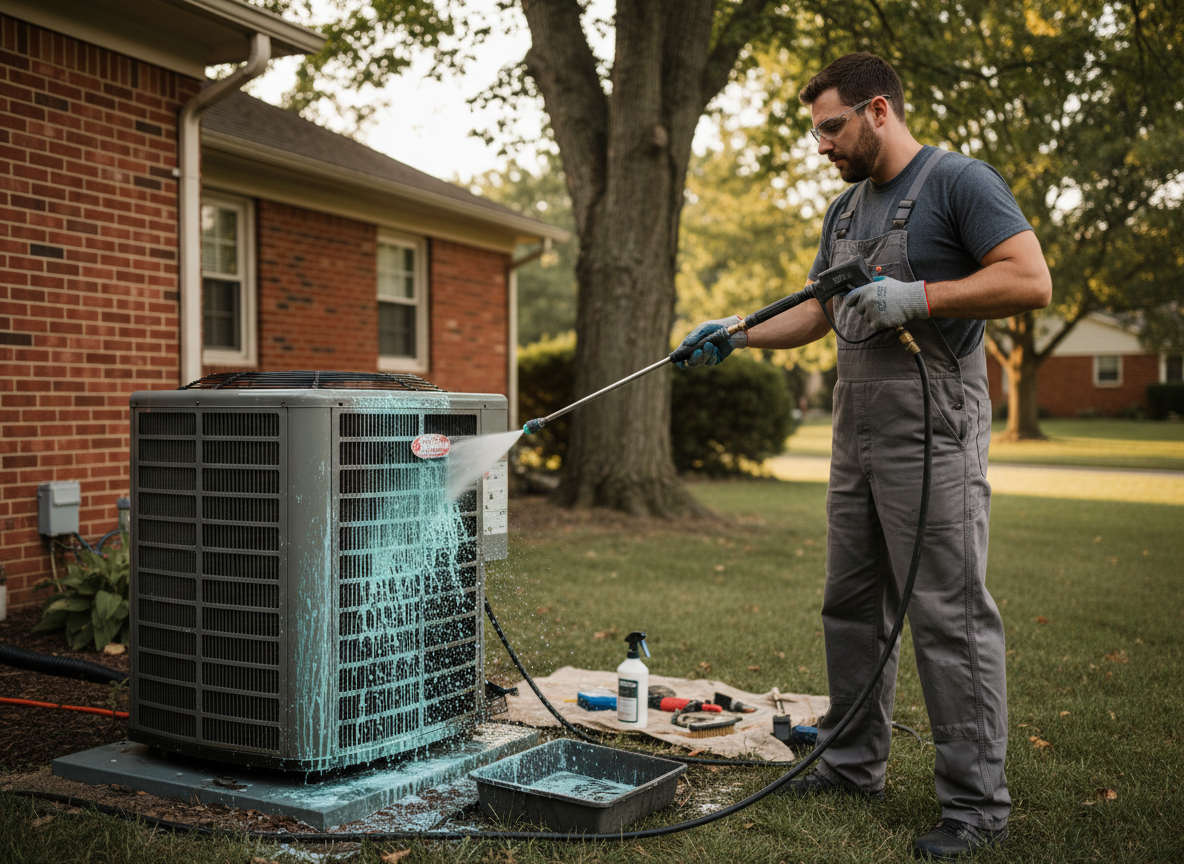
Upper Arlington homes built in neighborhoods such as Arlington Ridge, Tremont, and River Ridge often contain older forced-air systems that collect pollen, dust, and humidity-driven mold on evaporator coils. During the humid summers typical of Franklin County, moisture lingers inside the cabinet and accelerates corrosion on aluminum fins, forcing the blower to work harder and pushing higher energy use. Technicians at 3855 Reed Rd use low-pressure water and non-acidic coil cleaners that respect the original equipment ratings while reaching the hidden rear rows that standard spray bottles miss.
Winter brings its own challenges. Once temperatures drop below freezing, condenser coils outside homes near Northam Park and the Upper Arlington Public Library collect road salt mist carried on winds from Columbus and Worthington. Salt residue pits the copper tubing and reduces heat-transfer efficiency the following spring. A proper coil cleaning HVAC visit includes brushing the outdoor fins straight, flushing the base pan, and checking the condensate drain line that frequently clogs with leaf debris from mature street trees common in these blocks.
Homeowners in Grandview Heights and nearby River Ridge sometimes notice musty odors when the system first starts in spring. That smell usually traces to biofilm on the indoor coil that standard filter changes never reach. The service includes removing the access panel, vacuuming loose debris, applying an EPA-registered coil coating, and verifying static pressure before and after to confirm the job restored the original airflow the equipment was designed to deliver.
Because many Upper Arlington systems sit in tight crawlspaces or low attics, coil cleaning HVAC requires compact equipment and careful panel handling to avoid damaging insulation or disturbing knob-and-tube wiring still present in pre-1960 homes. Skipping these steps can create new problems that cost more than the cleaning itself.
Technician insight
In Upper Arlington the thing that catches most people out with coil cleaning hvac is how quickly the aluminum fins on 1990s equipment pit once road salt from Grandview Heights and Worthington blows through the condenser during our cold, windy winters; if you wait until the unit ices up in summer you usually need new coils instead of just a cleaning.
Hidden Biofilm in Tremont Attic Unit
A homeowner near Tremont reported weak airflow and a musty smell each spring. Inspection showed thick biofilm on the evaporator coil inside a low attic above a 1970s ranch. The coil was cleaned on-site, the drain line was flushed, and static pressure returned to the original design range. Odor disappeared and the system ran quieter through the following humid summer.
How it works
- 1
Initial Static Pressure Reading
Measure supply and return pressures at the air handler to establish a baseline before any cleaning begins.
- 2
Coil Access and Dry Vacuum
Remove access panels, vacuum loose debris from both sides of the evaporator coil, and clear the condensate pan.
- 3
Coil Application and Rinse
Apply non-acidic cleaner, allow dwell time, then rinse with low-pressure water while protecting electrical components.
- 4
Outdoor Condenser Service
Brush and rinse the outdoor coil, straighten fins, and flush the base to remove salt and pollen residue.
- 5
Final Verification
Reassemble, recheck static pressure, and confirm the condensate line flows freely before leaving the site.
Pricing
Pricing varies with system access, number of coils, and whether the unit sits in a crawlspace or attic; most Upper Arlington jobs fall in the mid-three-figure range.