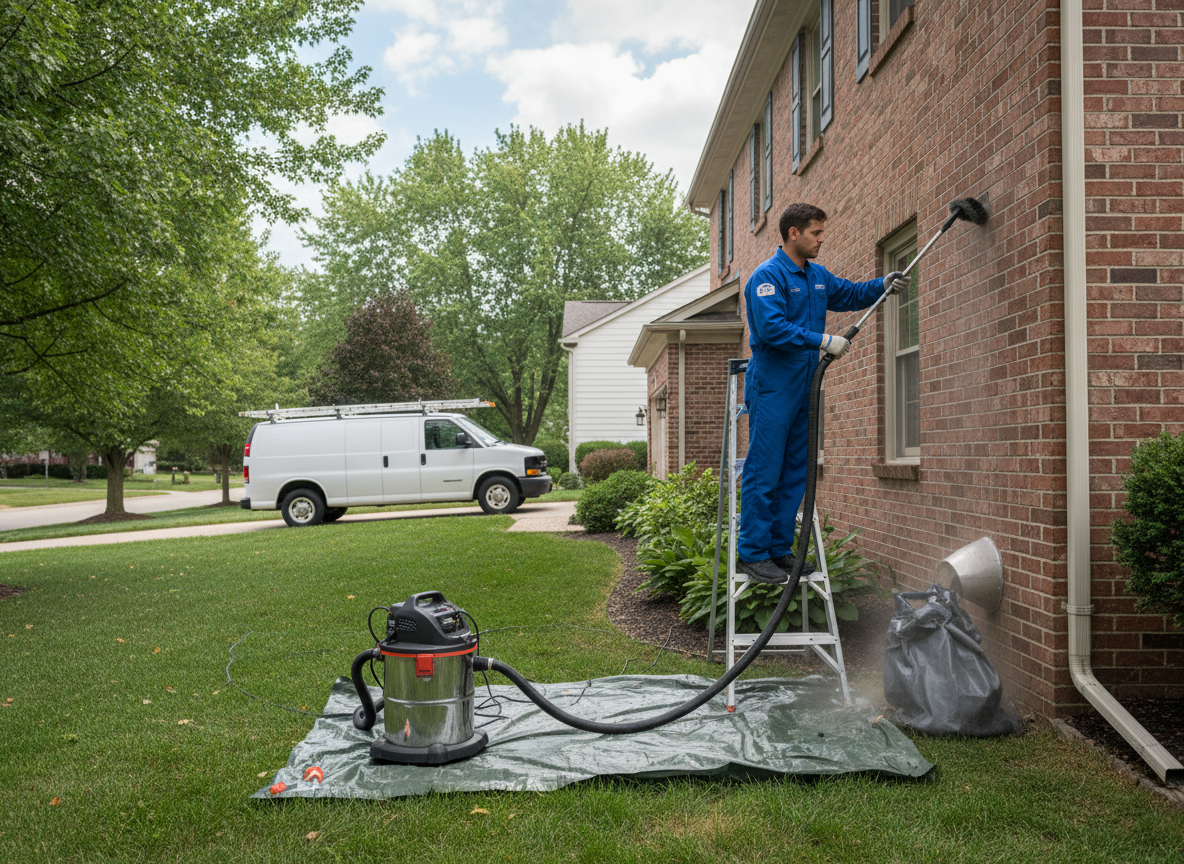
Homes in Upper Arlington, particularly those in neighborhoods like Arlington Ridge and Tremont, often feature mid-century construction with extended dryer vent runs that snake through walls and attics before exiting near ground level. These longer paths collect lint quickly in the humid continental climate with its four distinct seasons, where spring pollen and fall leaf debris add to the load. Regular cleaning prevents restricted airflow that forces dryers to run longer and raises fire risk in the dense housing stock around Northam Park and the Upper Arlington Public Library.
Technicians address edge cases such as vent terminations blocked by snow in winter or overgrown landscaping in summer near River Ridge properties. Metal venting is preferred over flexible plastic in Franklin County installations because it resists crushing and meets local code expectations for proper slope and termination height. Access challenges arise in split-level homes common around the Upper Arlington Municipal Center, where reaching the full run requires removing dryer units and sometimes exterior vent covers.
Seasonal humidity swings in the region accelerate lint compaction inside vents, especially when residents run multiple loads during cold months when windows stay closed. Cleaning restores proper exhaust, cuts energy use, and reduces moisture that can lead to mold in crawl spaces common in older Grandview Heights-adjacent properties. Every job includes a camera inspection to confirm the vent is clear from the dryer connection to the exterior termination.
Technician insight
In Upper Arlington, the thing that catches most people out with dryer vent cleaning is the long horizontal runs in 1950s and 1960s homes near Northam Park where the vent drops into a crawl space before exiting; those sections trap moisture from the humid continental seasons and need extra passes to clear fully.
Extended Vent in Tremont Home
Homeowner noticed longer drying times after several loads. Inspection revealed a 28-foot run with two 90-degree turns and heavy lint buildup near the crawl space exit. We disconnected the dryer, cleared the full length with rotary tools, and confirmed clear airflow on the test cycle.
How it works
- 1
Initial Inspection
Camera scope from the dryer connection through the full run to locate blockages and confirm vent material and length.
- 2
Disconnect and Access
Safely disconnect the dryer and remove exterior vent cover or grille while protecting flooring and walls.
- 3
Mechanical Cleaning
Use rotary brushes and high-powered vacuum to extract compacted lint without damaging vent sections.
- 4
Reassembly and Test
Reconnect the dryer, reinstall the exterior termination, and run a test cycle to verify restored airflow.
Pricing
Cost depends on vent length, number of turns, and access difficulty typical in Upper Arlington homes.