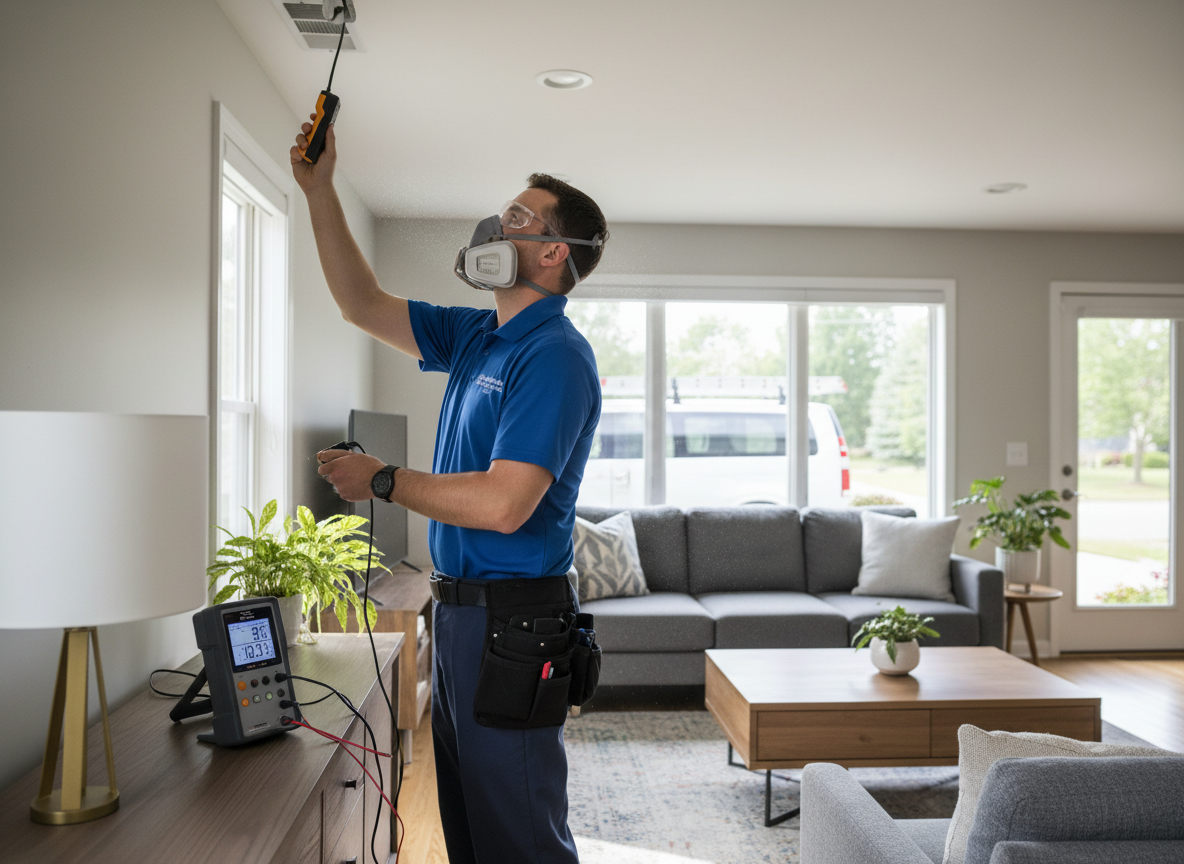
Upper Arlington homes in neighborhoods like Arlington Ridge and River Ridge often feature mid-century construction with original ductwork that collects pollen and debris during the humid continental seasons. Four distinct seasons bring heavy spring and fall pollen loads plus winter heating cycles that push fine particles through registers, especially in single-story ranches common along Reed Road. Air duct cleaning here focuses on reaching trunk lines and branch runs without disturbing insulation in crawl spaces or attics that can trap moisture from Franklin County humidity.
Northam Park and Upper Arlington Public Library sit near many older properties where tree cover increases outdoor allergen entry through unsealed returns. We map each system before cleaning to avoid negative pressure that could pull attic dust into living spaces, a common issue when homeowners run constant fan mode during summer humidity spikes. Proper sealing of access points after service prevents re-entry of debris stirred up by traffic on nearby Tremont streets.
Homes bordering Worthington and Grandview Heights frequently share HVAC layouts with shared walls that allow cross-contamination if one unit is neglected. Our process includes inspecting for disconnected flex ducts common in 1960s builds, which can silently degrade air quality even when filters look clean. Seasonal timing matters: fall cleanings before furnace startup remove accumulated summer moisture that otherwise promotes microbial growth once heating begins.
Technician insight
In Upper Arlington the thing that catches most people out with indoor air quality services is the number of 1960s homes along Reed Road whose original metal ducts have settled and developed small gaps at joints. Those gaps pull in attic dust every time the system runs during our four-season swings, and homeowners often miss them until we map the full trunk line.
Disconnected Flex in Arlington Ridge
A homeowner in Arlington Ridge noticed persistent dust on surfaces despite frequent filter changes. We found a disconnected flex run behind a closet wall that had been pulling attic insulation into the system for years. After reconnecting the duct and cleaning the entire trunk we restored proper airflow and eliminated the visible dust within two weeks.
How it works
- 1
System Mapping
We inspect every accessible trunk, branch, and return in the home to identify disconnected runs or damaged insulation before any cleaning begins.
- 2
Negative Pressure Setup
Equipment is positioned to contain debris within the ducts, protecting carpet and furnishings in rooms near the Upper Arlington Municipal Center.
- 3
Agitation and Extraction
Rotating brushes and compressed air reach corners while HEPA vacuums pull material out, with extra attention to older metal ducts common in Tremont.
- 4
Final Inspection and Sealing
Registers and access points are checked and resealed to prevent future infiltration from the humid continental climate.
Pricing
Pricing depends on square footage, number of returns, and duct condition; we provide upfront quotes after the initial mapping visit.