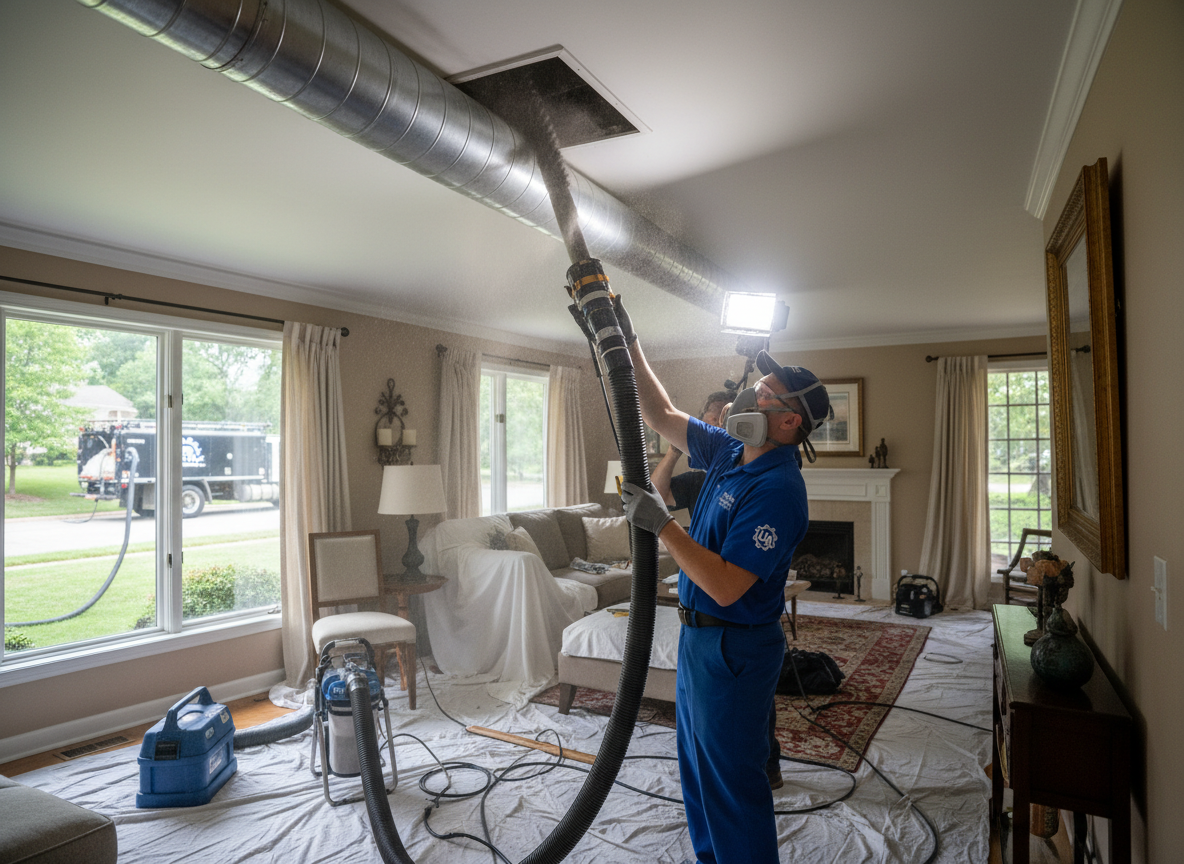
Upper Arlington's post-war housing stock in neighborhoods like Arlington Ridge and Tremont features original galvanized metal duct runs that collect fine silt and insulation fibers over decades. Humid continental summers drive high indoor humidity that clumps dust on the interior walls of supply trunks while winter heating cycles dry everything out and make the debris airborne again. Homes near Northam Park and the Upper Arlington Public Library often sit under mature tree canopies that drop extra pollen and leaf fragments into return intakes each fall.
Technicians access these systems through existing floor and ceiling registers rather than cutting new openings, then apply negative pressure from the main trunk to pull material toward the vacuum without disturbing the older sealed joints common in Franklin County construction. Flexible duct sections added during later renovations in River Ridge frequently sag and trap moisture, creating hidden mold pockets that require separate camera inspection before brushing. Nearby Columbus traffic and Worthington construction dust add an extra layer of fine particulate that standard household filters miss.
Seasonal swings also affect job duration. Spring and fall bring the heaviest loads when residents open windows near Grandview Heights and the Municipal Center, pulling outdoor allergens straight into the return network. Winter jobs move faster because cold air keeps dust settled, but technicians must still clear condensation lines that freeze and crack in uninsulated crawl spaces typical of the area.
Technician insight
In Upper Arlington the thing that catches most people out with professional air duct cleaning is the original 1950s trunk lines in Tremont homes that have unsealed longitudinal seams; once winter heating starts those seams shed decades of accumulated silt that standard filters never catch.
River Ridge Duct Buildup
Residents reported persistent dust after opening windows near Northam Park. Inspection showed heavy pollen and leaf debris packed in the main return near the library branch. Negative-pressure cleaning cleared the trunk and flexible runs added in a 1990s renovation. Airflow returned to normal and the homeowners noticed less settling on surfaces.
How it works
- 1
Initial Inspection
Camera scan of main trunks and branches through existing registers to map layout and note any damaged sections in older Upper Arlington homes.
- 2
Negative Pressure Setup
Attach vacuum to the trunk line and seal registers to pull debris toward the collection point without spreading it through living spaces.
- 3
Agitation and Brushing
Run rotating brushes and compressed air whips through each run to loosen caked material on metal walls and flexible sections.
- 4
Final Vacuum and Verification
Re-vacuum all lines then re-inspect with the camera to confirm clearance before restoring airflow.
Pricing
Pricing varies by number of runs, home size, and condition of older ductwork common in Tremont and Arlington Ridge.